When it comes to finding pain relief, exercises for hip arthritis can be extremely powerful. Exercises can help to improve flexibility, stiffness, pain, and strength! There are specific exercises that will be better than others when it comes to being nice to your hip joints. You want to make sure you are not making your pain worse by doing the wrong exercises. Let’s look at the 15 greatest exercises you should be doing including squats, lunges, stepping in different directions and more.
As a physical therapist and arthritis specialist, I primarily see people who are dealing with hip and knee osteoarthritis pain. I have noticed that hips can be a little more sensitive than knees so it’s important to feed them the right movements.
If you spend time doing the wrong movements, you can actually increase your pain because your joint becomes angrier. My goal is to show you exercises for hip arthritis that make pain better, not worse.
Some movements may be painful but they don’t all have to be. It is important that you find the right exercises that feel good to you.
This list of exercises for hip arthritis may not all feel great to you and that is okay. Choose at least 4-5 that you can consistently do to decrease your pain.
If you’re looking to avoid or prolong a hip replacement, finding the best exercises for hip arthritis is a great place to start, I’m glad you’re here.
15 Powerful Exercises for Hip Arthritis Relief
Researchers have found that exercise can be very powerful when it comes to reducing pain and improving function. It is common to think that exercise makes osteoarthritis worse because of the myth around “wear and tear”. But that is not true.
Understand more about how exercise benefits arthritic joints by reading this article here.
When it comes to finding relief from hip osteoarthritis, it is important to make sure that the hip is supported. The best support your body has is muscle support which can be improved upon with the right strengthening exercises.
If you are primarily walking for exercise and still experiencing pain, strengthening exercises could be the piece you are missing.
The best exercises for hip arthritis that you’ll likely benefit from are based upon:
- your current fitness level
- your current strength
- pain levels and sensitivity to pain
- other activity you are doing throughout the day
As you move through this list of 15 exercises, if something doesn’t feel right or increases pain significantly, it may not be appropriate for you right now.
I often find many people with hip osteoarthritis are on the either side of the spectrum of overdoing activity or not doing nearly enough activity. Both can lead to increased irritation of the hip joint. More is not always better.
It’s also important to note that with hip osteoarthritis, you may not feel pain until after you do an activity or an exercise. Start on the conservative side with sets and repetitions and increase as you are able.
Exercise 1: Hip Circles
This first exercise is especially helpful if you are currently experiencing hip pain. Small, gentle, and circular motions can help to relax the muscles around the joint. This relaxation can reduce your pain.
You may need to hang onto something like a kitchen counter when doing this if you have difficulty with your balance. Complete 20-30 seconds each side, making your circles as large as is comfortable. You can also reverse directions. Complete 2-3 times each day as long as it feels good.
Exercise 2: Isometric Hip Flexion
Again, this exercise can be helpful if you are currently experiencing hip pain, especially in the front of your hip. This will also reduce a tightness feeling in the front of your hip as well, in your hip flexor. I have found this to be much more effective than stretching to relieve tightness.
Meet your leg and hand with about 50% of your max effort when trying this. This should not increase pain.
The idea of isometric exercises is to contract the muscle then allow it to relax, which helps to release tension. Complete 5-10 reps on the most painful side. You can also complete on the other side if tightness is felt there too.
This can be a tool you can also use at night if you are experiencing pain.
Exercise 3: Hip Swings
These hip swings can help with improving mobility in your hip, especially in a backwards direction. Start small with these swings then increase distance as you are able to.
Many times, moving your leg backwards may be painful so this exercise can be very helpful for your hip joint to feel more comfortable in this position.
Complete for 20-30 seconds on each side, using support of a chair or counter on the same side that is swinging. Repeat 2-3 times as long as it feels good to you.
Exercise 4: Lateral Kicks
Lateral hip movements can also be limited and painful in some people. It is important to work to maintain that movement though as it is not one you likely do during the day very often. It is imperative that you practice this movement to keep or improve your mobility.
Use a wall for this one to keep yourself upright. Only go out as far as is comfortable to start. If your hip doesn’t move very much, that’s okay. There is room for improvement!
Complete 10-30 reps on each side, about 2-3 times per day as long as it does not increase pain significantly.
Exercise 5: TRX Hip Hinge
These suspension straps can be magical when it comes to relieving arthritis pain. This is why they made the list for the most powerful exercises for hip arthritis!
The hip hinge is arguably one of the most vital exercises if you are dealing with arthritic hips. It is both a mobility and beginner level strengthening exercise, especially if your hips flare easily.
You can get a set of these suspension straps here for less than $75 which honestly is a steal because they are amazing. You can see other exercises that you can use these straps for here.
Complete 10-20 of these hips hinges for 2-3 sets. Focus on squeezing your glutes at the top. You may also feel a stretch in the back of your legs as you bend forward and that’s okay!
If you don’t have these straps, you can also simply hang on to a kitchen counter or a sturdy chair.
Exercise 6: TRX Squat
Another exercise using the suspension straps is the squat. Squats can be commonly painful but adding support makes them so much easier to do!
I have people that haven’t been able to squat in years finally feel confident again because of these straps.
Squats pack so many benefits including strengthening of lots of different muscles at once. You have to be able to squat to complete daily tasks so it’s time to become great at them. Here are some other squat modifications you can also try.
Try 8-12 squats for 2-3 sets. Go down only as far as is comfortable for you. You may be surprised how good they feel!
If you don’t have these straps, you can also hold onto a sturdy chair or a kitchen counter.
Exercise 7: Hip Bridge
Hip bridges help to build the back of your legs and your glutes. They can also help you get more range of motion in your hips.
If you have a hard time getting up and down from the floor, this exercise can also be done on a bed or a couch. Keep in mind, the firmer the surface, the better.
The goal is to lift your hips as high as you can, comfortably. Think about pushing through your heels. Try to complete 8-15 reps of these, holding a couple of seconds at the top. 2-3 sets would be optimal.
Exercise 8: Calf Raises
Your calf muscles can become tight, especially if you have found yourself beginning to limp. The idea with these raises is to contract and relax the muscle. Simply stretching will likely not get you very far.
This is a pretty simple exercise but is important to add to your routine. The good thing with this one is it rarely aggravates the hip. It can help also prevent foot and ankle problems down the road too.
Try to complete 20 reps of these calf raises, or until your calves reach fatigue. I recommend holding onto something for support so you can get higher on your toes.
Exercise 9: Power Push Ups
You may be asking why did an upper body exercise make the exercises for hip arthritis list. But this exercise can be extremely effective in building core stability and helping to stretch the fronts of your hips.
Many of the people I work with, love this exercise because it typically feels good! In order to find hip arthritis pain relief, your whole body needs to be moving optimally, not just your painful hip!
Upper body exercises are often overlooked with lower body arthritis but I would work on complete 10-20 of these, for at least 2 sets.
Exercise 10: TRX Staggered Squat
This exercise can be a little deceiving, as it is harder than it appears. This single leg squat variation uses the straps again. Starting without the straps can be pain provoking.
The idea is to see if each side is as strong as the other. If there is a clear difference, you have to work. to close the gap. When you have gaps in strength, it can lead to limping, more pain, and more stress to your joints.
Complete 5-8 each side and compare your strength. Complete 2-3 sets as able. This one can cause muscle soreness which is totally normal but please be aware.
If you don’t have these straps, you can also complete this exercise without upper body support but it will make the exercise more difficult.
Exercise 11: hip thrust
This is a version of the earlier hip hinge but now weights are added for extra difficulty. Choose a dumbbelll or a kettlebell between 5-10lbs to start. Adding weight increases the amount of power required to stand up tall.
Make sure to master the bodyweight version of this first. You should not feel this much in your back if you are leading with your hips. Focus on squeezing your hips at the tip.
Complete 10-20 of these. If 20 feels pretty easy, gradually increase the weight. Try for 2-3 sets as long as it feels good to you.
Exercise 12: Kettlebell Deadlift
The deadlift is one exercise you should put priority on mastering. I usually don’t introduce this exercise until the above exercises are mastered.
You can use a kettlebell or two dumbbells when trying this. Start on the lower end of the weight and work your way up. This is extremely beneficial to build hip strength necessary to support the joint.
Start with 8-10 reps. The back of your legs may become sore because they don’t get worked much during the day but that should dissipate the more familiar you come with the exercise.
Exercise 13: Single Leg Deadlift
Maintaining and improving your balance is crucial to finding hip arthritis pain relief. If your balance feels off, it is definitely something you should be working on. Pain can delay your balance but you can train it just like you can train your muscles.
This exercise is an advanced balance exercise so if it is difficult when first trying, that’s normal. You can find others in this video here.
Try to complete 8-10 each side. Take your opposite leg back as far as is comfortable for you. Complete 2-3 sets. Again you want to make sure both sides are relatively even. If not, you need to focus on closing the gap.
Exercise 14: Wall Sit and Press
Your core in incredibly important for life in general but particularly for hip arthritis. Your hips are closely connected to your spine. Your core muscles help to support that to prevent further back pain and other hip issues.
If you have noticed an onset of back pain with your hip arthritis, your core could need some work. If you haven’t, working on your core will only help you in the future.
This exercise doesn’t usually flare up hip pain and can help you contract those deep core muscles. You can add weight for more challenge.
The idea is to keep your spine in contact with the wall as you move your arms. Being able to keep your core stable and not arch your back especially as your arms go overhead can be a challenge. You are resisting the extension your back wants to go into.
Try for 10-20 reps of this, pressing up and out is 1 rep. Complete 2-3 sets as feels comfortable.
Exercise 15: Balance Pass
This is one of my all time favorite balance exercises. It can be helpful for varying degrees of arthritis in hip, knee, low back, and more. This exercise looks easier than it is (like most balance exercises!).
Start with a lighter weight because the heavier the weight, the harder the exercise. The idea is your hip muscles will kick in to keep you upright. They also have to continue to work throughout the duration of the exercise.
Try to pass the dumbbell back and forth for at least 30 seconds standing on one foot or with a kickstand using your back leg. Complete 2-3 times on each side.
Conclusion
The best course of action if you have hip osteoarthritis is to choose a few of these exercises to complete every day (or every other day if necessary). The magic is in the consistency.
If you are feeling lost in where to start or would like follow along workouts that matched your current fitness level right now (whether that’s beginner, intermediate or advanced)- the signature membership, Adventurers for Life is just what you need.
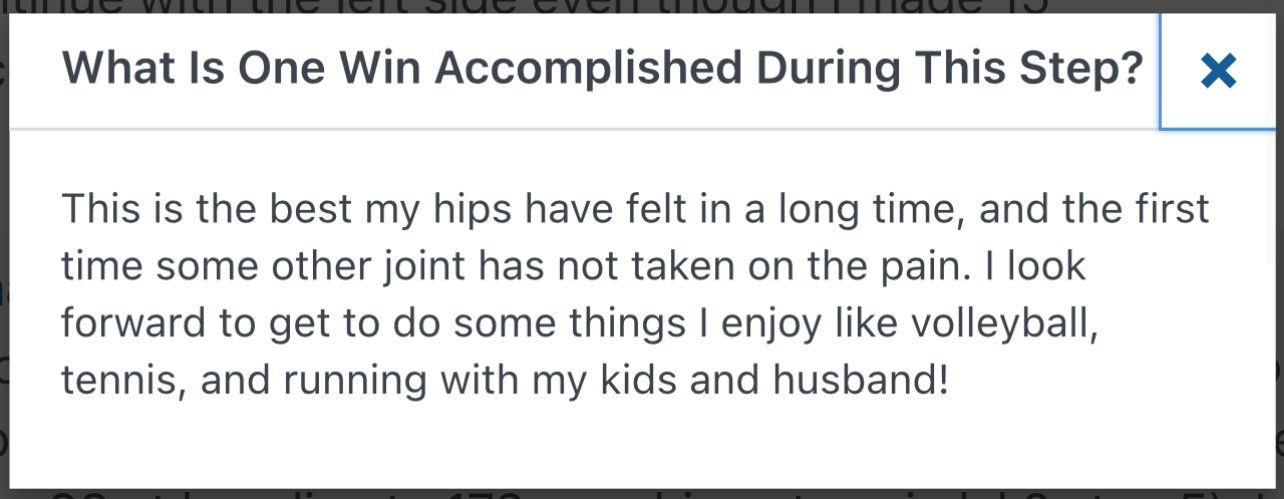
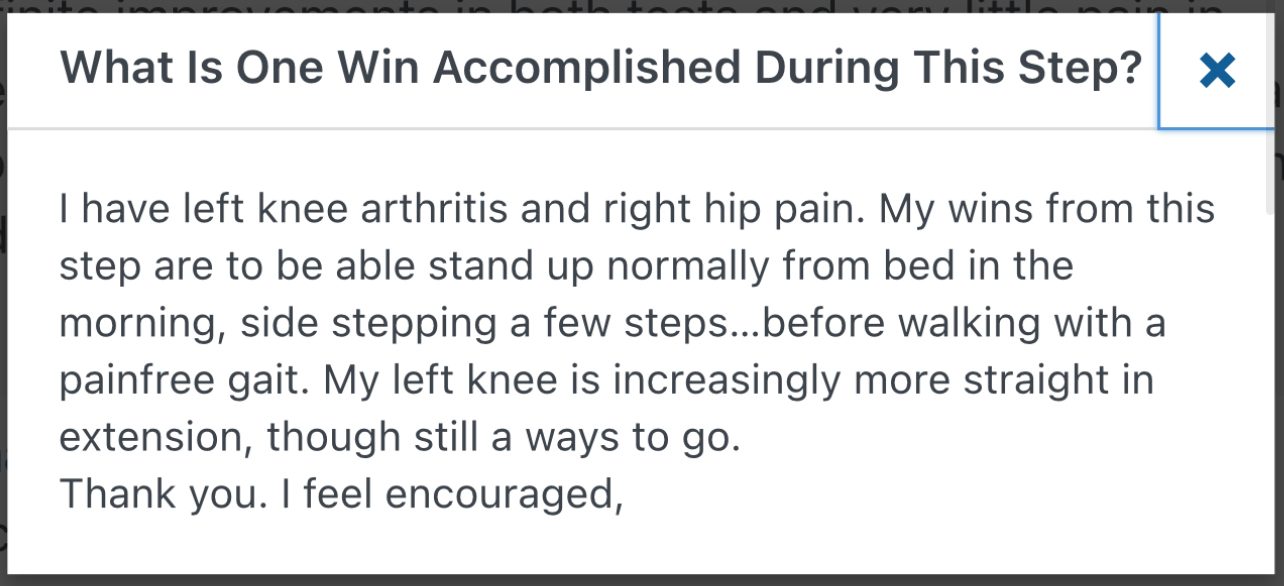
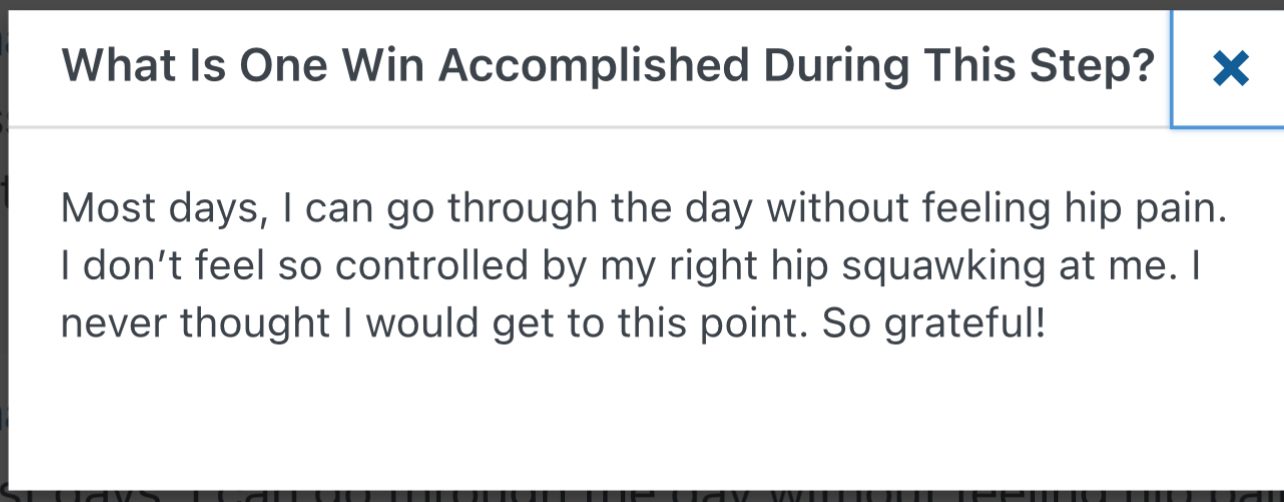
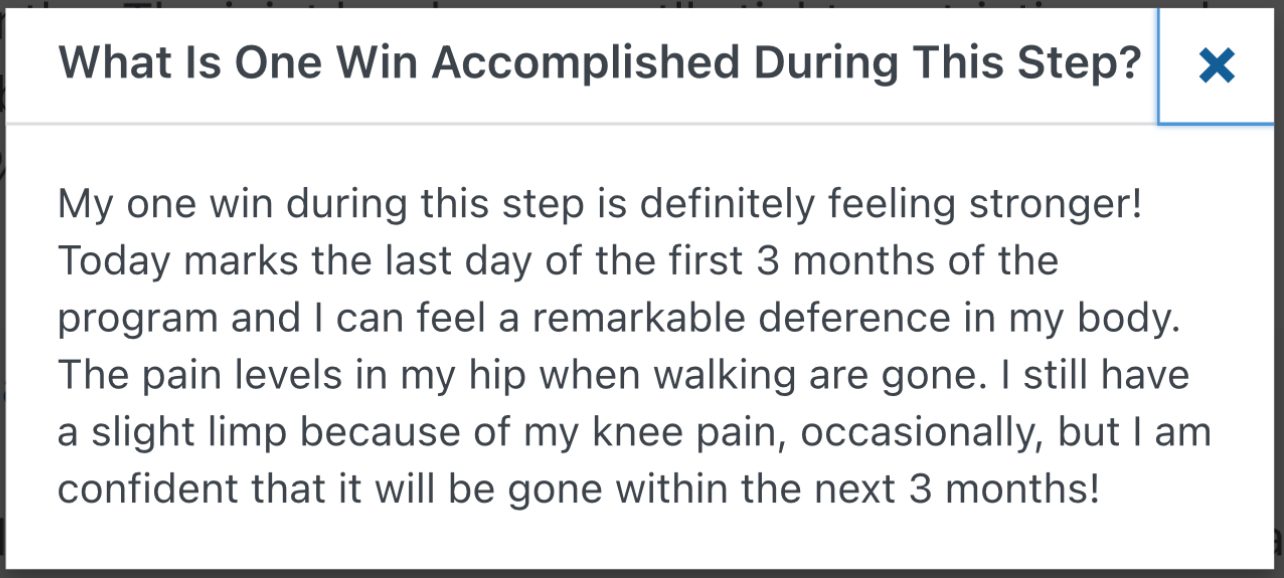
Many members have hip osteoarthritis and are walking longer distances, sleeping better and climbing stairs like they used to!
It’s your turn to make a change. It’s your turn to unlock your potential just like these members did below:

Alyssa Kuhn
Disclaimer: This post is for general informational purposes only. It should not be used to self-diagnose and it is not a substitute for a medical exam, cure, treatment, diagnosis, and prescription or recommendation. It does not create a doctor-patient relationship between Dr. Kuhn and you. You should not make any change in your health regimen or diet before first consulting a physician and obtaining a medical exam, diagnosis, and recommendation. Move Well Age Well, LLC and Dr. Alyssa Kuhn, PT, DPT are not liable or responsible for any advice, course of treatment, diagnosis or any conclusions drawn, services or product you obtain through this video or site.

If you are looking to regain your active life but are unsure where to start, join the revolutionary membership, Adventurers for Life. This is a step-by-step path that not only will help you find pain relief but will help you unlock adventure. You’ll get workouts, tests to pass to make sure you are on the right track, community events and MORE.